Source car window visor for SUVs, Sedans, and Trucks
Compare 30 car window visor options from Chinese manufacturers offering PMMA, ABS, and glass materials. Buyers can evaluate customization, sizes, and MOQs for universal fitment across various vehicle types.
Key considerations
Products List




Comprehensive Sourcing Guide
Strategic Sourcing Guide for Automotive Window Visors
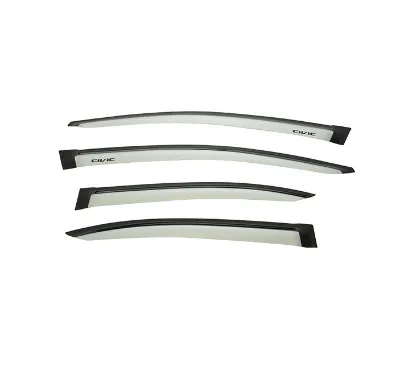
The global automotive aftermarket continues to demand high-quality accessories that enhance vehicle utility and driver comfort. Among these, the car window visor, often referred to as a wind deflector or rain guard, represents a critical category for B2B procurement. These components serve a dual purpose: allowing fresh air circulation while protecting the interior from rain and wind noise. For procurement professionals, sourcing these items requires a nuanced understanding of material science, manufacturing tolerances, and supply chain logistics. This guide synthesizes available market data to provide a disciplined framework for evaluating suppliers and selecting products that meet rigorous operational standards.
Material Composition and Structural Integrity
The foundation of a reliable window visor lies in its material composition. Market observations indicate a divergence in material choices, primarily centering on PMMA Acrylic and ABS (Acrylonitrile Butadiene Styrene). PMMA Acrylic is frequently cited for its optical clarity and resistance to yellowing over time, making it a preferred choice for high-end applications where aesthetics are paramount. Products utilizing this material often feature a specific thickness of 1.4mm, a dimension that balances rigidity with flexibility to prevent cracking during installation or exposure to wind pressure.
Conversely, ABS offers a robust alternative known for its impact resistance and ease of molding. Some manufacturers utilize a composite approach, combining ABS with glass components to achieve specific optical properties or structural reinforcement. When evaluating potential suppliers, buyers must verify the specific material grade used. The presence of "High quality acry plate" in product specifications suggests a focus on optical transparency, which is essential for minimizing visual distortion for the driver. Procurement teams should request material safety data sheets (MSDS) to confirm that the polymers used are free from harmful volatile organic compounds (VOCs) that could off-gas inside the vehicle cabin.
Technical Specifications and Dimensional Standards
Precision in manufacturing is non-negotiable for automotive accessories, as improper fitment can lead to product failure or vehicle damage. The technical specifications for window visors vary significantly based on the intended vehicle application. Data indicates that products are available in widths of 8cm, 10cm, and 12cm, catering to different vehicle window geometries. Furthermore, the size is often customizable, with specific models like 207001 and 207002 representing distinct design iterations.
A critical specification to monitor is the viewing angle. Some visor designs, particularly those intended for side mirrors or specific mounting positions, boast a 360° view angle, ensuring that the accessory does not obstruct the driver's peripheral vision. The position of installation is another key factor; most units are designed for "Outside" mounting, which requires a secure adhesive or mechanical fastening system that can withstand high-speed aerodynamic forces.
The following table summarizes the observed technical parameters for common visor configurations:
| Parameter | Observed Specification | Procurement Verification Point |
|---|---|---|
| Material | PMMA Acrylic, ABS, or ABS+Glass | Request material certification and tensile strength data. |
| Thickness | 1.4mm | Verify via caliper measurement on sample units. |
| Width Options | 8cm, 10cm, 12cm | Confirm availability of specific widths for target fleet. |
| Size Customization | Acceptable / Universal / 2.0 inch | Define exact fitment requirements before ordering. |
| View Angle | 360° (for specific models) | Validate optical clarity and field of view in samples. |
| Base Material | Plastic or Aluminum | Assess weight and corrosion resistance requirements. |
| Mirror Type | Spherical Mirror (for specific variants) | Ensure curvature matches vehicle mirror geometry. |
Compliance, Certification, and Safety Standards
In the B2B sector, compliance with international standards is a primary risk mitigation strategy. While specific certification names were not universally listed in the provided data, the product standard is noted as "Universal+Special." This designation implies that the manufacturer adheres to a baseline of universal automotive accessory standards while also accommodating specialized requirements for specific vehicle makes or models. Buyers must actively verify that the products meet local regulatory requirements for automotive safety in the target market.
For instance, in many jurisdictions, materials used in vehicle interiors and exteriors must pass flammability tests and UV stability assessments. The "Universal" fitment claim suggests a broad compatibility, but procurement teams should not assume this applies to all vehicle types without verification. The "Car Fitment" is listed as "Universal" and "Fit for Most cars," yet the "Car type" is described as a "Various choice." This discrepancy highlights the need for a rigorous fitment matrix. Buyers should demand a detailed compatibility chart from the supplier, cross-referencing specific vehicle models with the visor dimensions to ensure a secure installation that does not interfere with window mechanisms or airbags.
Cost Drivers and Pricing Dynamics
Understanding the cost structure of window visors is essential for budgeting and margin analysis. The observed price range in the market spans from $0.18 to $138 USD. This wide disparity is driven by several factors, including material quality, customization level, and order volume. The lower end of the spectrum likely corresponds to standard, non-customized units produced in high volumes, while the higher end reflects specialized designs, premium materials like high-grade acrylic, or complex packaging requirements.
The Minimum Order Quantity (MOQ) is a significant cost driver. Data indicates an MOQ of 500 pieces for certain models, while others require a commitment of 3000 pieces. These thresholds directly impact the unit cost; larger orders typically secure a lower price per unit due to economies of scale in molding and assembly. Additionally, the customization of the logo, with options for "Anma or OEM," adds a layer of cost. Branding requires setup fees and potentially longer production runs to amortize these costs. Buyers should negotiate based on their projected volume, aiming to balance the MOQ with their inventory turnover rates to avoid excessive holding costs.
Supplier Evaluation and Logistics Capabilities
Selecting the right supplier involves more than just comparing unit prices; it requires a holistic assessment of their logistical and operational capabilities. The production origin is consistently listed as Zhejiang, China, and the mainland, which is a major hub for automotive accessory manufacturing. This region offers a mature supply chain for plastics and automotive components. However, buyers must verify the specific port of loading, which is observed as Shanghai or Ningbo. These are major international ports, but the distance from the factory to the port can impact lead times and shipping costs.
Lead time is another critical metric. The standard delivery time observed is 25-30 days. This timeframe includes production, quality control, and packaging. For time-sensitive procurement, this window must be factored into the overall supply chain schedule. Payment terms are flexible, with options including TT (Telegraphic Transfer), West Union, and Paypal. While these options offer convenience, B2B buyers should prioritize secure payment methods that offer protection against non-delivery, such as Letters of Credit (LC) for large orders, even if not explicitly listed as a standard option.
The packaging method is also a vital consideration for logistics efficiency. Products are typically packed in PE bags for individual units, with options for carton packaging for bulk shipments. Some specialized items come in "Slid Card" packaging, which may be necessary for retail display. The single package size of 60x10x10 cm and a gross weight of 1.000 kg per item provide concrete data for freight calculation. Buyers should ensure that the packaging is robust enough to prevent damage during transit, especially for acrylic products which can be prone to scratching or cracking if not properly cushioned.
Quality Control and Long-Term Procurement Strategy
Implementing a robust quality control (QC) protocol is essential for maintaining brand reputation. Given the "Customization" availability, buyers must establish clear acceptance criteria before production begins. This includes verifying the thickness, width, and finish of the visors. The "Easy Installation" feature suggests that the design should be user-friendly, but this must be validated through physical testing. Buyers should request pre-shipment samples to test the adhesive strength, wind resistance, and fitment on actual vehicle models.
Long-term procurement success relies on building a relationship with suppliers who can scale with demand. The availability of OEM services indicates that suppliers are capable of producing branded goods, which is crucial for companies looking to expand their product lines. However, the "Universal" fitment claim requires ongoing validation as vehicle designs evolve. Procurement teams should schedule regular audits to ensure that the supplier maintains consistent quality standards and adheres to the agreed-upon specifications.
Furthermore, the "Feature" of the product as a "Window wind deflector" implies a functional requirement that must be met consistently. Buyers should monitor customer feedback and return rates to identify any systemic quality issues. If a specific model, such as the one with model number 501001, shows higher defect rates, the procurement strategy should adapt to either switch suppliers or adjust the QC inspection frequency for that specific item.
In conclusion, sourcing car window visors requires a meticulous approach that balances technical specifications, cost efficiency, and supply chain reliability. By focusing on material integrity, verifying fitment data, and maintaining strict quality control, B2B buyers can secure a steady supply of high-performance automotive accessories. The wide range of options available, from standard PMMA units to customized ABS composites, offers significant flexibility for meeting diverse market needs. Success in this category depends on the buyer's ability to navigate the complexities of customization, logistics, and compliance to deliver value to their end customers.
FAQs
What materials are used for car window visors?
Car window visors are primarily made from PMMA Acrylic or ABS plastic. Some models combine ABS with glass components for structural reinforcement. Buyers should verify material grades to ensure optical clarity and resistance to yellowing over time.
Can I customize the size and logo of the visors?
Yes, customization is available for both size and logo. The product size can be customized, and logos can be printed as Anma or OEM. Buyers must define exact fitment requirements before ordering to ensure proper manufacturing tolerances.
What is the minimum order quantity for these products?
The minimum order quantity varies by model, typically starting at 500 pieces or 3000 pieces. Specific models like 207001 require 500 PCS, while others may demand 3000 PCS. Larger orders often secure lower unit costs due to economies of scale.
How long does it take to receive the order?
The standard delivery time is 25 to 30 days from order confirmation. This timeframe includes production, quality control, and packaging. Buyers should factor this lead time into their overall supply chain schedule to avoid delays.
Where are these car window visors manufactured and shipped from?
The products originate from Zhejiang, China, and are shipped from Shanghai or Ningbo ports. These locations are major hubs for automotive accessory manufacturing. Buyers should verify the specific port of loading to calculate accurate shipping costs and lead times.
What thickness and width options are available for the visors?
The standard thickness is 1.4mm, with width options of 8cm, 10cm, or 12cm. These dimensions cater to different vehicle window geometries. Buyers must confirm the specific width required for their target fleet before placing an order.